Tuesday, March 1, 2011

Meeting George and Abe at the Nixon Library


by Angela Rocco DeCarlo, copyright, 2011

"I've got something special for you, " said President Abraham Lincoln to the young boy and girl.

With that he pulled from his trousers' pocket a handful of the shiniest of new US Lincoln copper pennies.

This Lincoln enactor, Bill Peck, was pitch perfect in appearance (with a real beard) and demeanor at the annual Presidents' Day free event at the Richard Nixon Presidential Library and Museum, Yorba Linda, CA. He spoke gently to the children as he explained the 2009 "Rail Splitter" pennies* he presented to them were keepsakes. Sam, 7, and Seritella, 5, our grandchildren, were awestruck as they accepted the shiny pennies. I admit, I was, too. He suggested the children learn not only the Gettysburg address, but Lincoln's second inaugural address filled with hope and prayer. It was a small moment of pure theater just for two little kids - beautiful.

The Nixon Museum has been a favorite destination for us to take our four young grandchildren over the past ten years. They've scampered up and through the presidential helicopter, which is a part of the permanent collection of Nixon objects. The Apollo astronauts and their accouterments were an exciting up-close encounter when on special exhibit. Today, Sam and Serritella walked in the set-in-cement-bootprints of Buzz Aldrin, the second man to step foot on the moon. The beautiful gardens and lawn enticed the children to games of tag. No "keep off the grass" signs here. This is a museum visitors can really enjoy in all aspects.

The children also were presented to President George Washington who graciously sat for photos with them. The Washington enactor, the Rev. Gary B. Beard**, appears throughout the US in his colonial uniform engaging with visitors to tell the story of early America using his vast array of authentic artifacts, including Bibles, cannonballs and antique currency. The patience and enthusiasm displayed is remarkable, providing a satisfying learning experience for children and adults.

President Thomas Jefferson, portrayed by Peter Small, held a copy of "his" Declaration of Independence as he circulated through the throngs of Nixon guests. It was fun to chat about our personal heroes Lewis and Clark and their great achievements in exploring the vast Louisiana Purchase territory, 1804-1806. Jefferson reminded us Lewis had been his personal secretary prior to appointing him captain of the expedition. He also made haste to laude their brave and resourceful guide Sacagawea. The brave young girl, who not only lead the explorers, also saved their precious journals from water destruction.

Later in the day the presidents would gather in the Nixon Library's White House East Room replica. The program would include a question and answer session allowing guests to learn more about these great US presidents.


The Museum hosts many free programs thorough the year to educate and entertain. There are free Sunday concerts, a fabulous miniature holiday train exhibit, displays of presidential gifts to the Nixon family received from heads of state and a fashion gallery featuring bridal gowns from the Nixon daughters.

The Nixon Library and Museum is the perfect size...it has not yet been overindulged to gigantic proportions which often happens to successful museums. It is intimate, charming and educational. Our grandchildren love it.

Richard Nixon Presidential Library and Museum
18001 Yorba Linda Blvd.
Yorba Linda, CA 92886
714-983-9120
http://www.nixonlibrary.gov
Admission: adults; $9.95; seniors $6.95;
children$3.75.

*Four new Lincoln pennies were minted in 2009 in celebration
of the bicentennial of Lincoln's birth. Each of the four penny designs
depict different aspects of his life and career. Our pennies were the "Rail
Splitter" design.
** George Washington enactor, the Reverend Gary Beard,
visits schools and other venues. www.washington1776.com.

copyright 2011 Angela Rocco DeCarlo

Wednesday, January 5, 2011

Trains and Treasures:Nixon Museum Yorba Linda, CA


By Angela Rocco DeCarlo,copyright, 2011

The Richard Nixon Library and Museum is an intimate facility highly suited to families and children, especially grandparents with young children. It does not overwhelm in size and so is an enticing destination at any time of the year.

Every Christmas season we take our grandchildren to enjoy the model train exhibits. Last year there were two rooms of spectacular model train layouts – a densely constructed Lego cityscape with many bridges, buildings and encampments. In the second room was the marvelously imagined tiered landscape with various-sized model trains choo-chooing across a fantasy America dotted with charming towns filled with miniature people.

This year’s visit found a smaller, though still interesting, Lego exhibit, which continues until January 28, 2011, with the second room devoted to “Treasures from the Vault:” A collection of valuable gifts given to the Nixon family, but owned by the U.S. government, by many foreign heads of state.

The Lego train exhibit is housed in the museum’s lobby all set about with various themed Christmas trees hugging the perimeter of the space. There’s the Presidents’ tree; the First Ladies’ tree; the Asian tree; the USA tree and others.

The Lego train curators created a little game with a series of items to be found. It made the viewing a fun challenge for children old enough to engage in a scavenger hunt. Finding the girl with the blue balloon proved impossible, but our gang of four, ranging in ages from 5 to 12, managed to locate some of the other game pieces, but not the curved staircase or the Christmas tree being decorated. Last year it was the tiny Superman that was highly sought after and finally located on the top of a building.


Favorites of the display included the large suspension bridge, the barrel tunnel and the colorful carnival scene alongside the little marina, complete with tiny sailboats. The Legos certainly struck a chord with our grandsons, Andrew, 10, and Sam, 7, who is now busy putting together a large Lego passenger airplane from his New Year’s Eve birthday.

The girls, Mish, 12, and Serritella, 5, toured the Legos and then visited the historic fashion gallery where the Nixon daughters’ bridal gowns are displayed together with First Lady Pat Nixon’s gowns. They moved on to the “Treasures of the Vault” (closed Jan. 30) and loved the gorgeous silk paneled screen with brilliant red background upon which white embroidered cranes cavorted. Junior fashionista, Mish, was impressed with the black crocodile Gucci ladies handbag, shown in a case with a companion handbag fashioned from authentic leopard fur – both exquisite.


Pope Paul VI’s gift to the Nixons of a 17th century painting of St. Peter’s Church, Rome, Italy – the largest Christian church in the world, is understated but spectacular. The beautiful forecourt and majestic elliptical piazza bounded by colonnades created in 1629-67 from Bernini’s designs, is seen without the surrounding buildings visible today. Many artists and architects put their brains and hands to the design, but it was Michelangelo, who in 1546 was made chief architect, who designed the great dome and finished part of it. Under the dome is the high altar which itself is above the tomb of St. Peter, the first pope.


My personal favorite was the dazzling gift of a Sultan in 1974 of emerald and diamond jewelry presented to Julie and Tricia Nixon. Nearby was the spectacular King Hussein gift of double strand pearl necklace. As it is the gift of a king it might be inferred the pearls are genuine, not cultured. In another display case was a splendid gold-encased 16th century Bible presented by Israel to President Nixon. All this beauty makes one wonder how the thank you notes could have adequately expressed appreciation for such riches. There are no details on what gifts were presented to the foreign leaders by the Nixons. One can only hope they were as tasteful and well-chosen as those displayed as gifts to the U.S.A. No VCRs back then.


The Nixon Library is part of the U.S.archives and museums which include eleven other presidential libraries. The wealth of historical documentation available at the Nixon is a resource for history buffs as well as students and scholars. The museum offers many programs to the community including free Sunday concerts. Also onsite is the actual Nixon house which is said to have been built by President Nixon’s father from a kit.The presidential limo and helicopter are also on display, as well as a giant version of the iconic photograph of President Nixon shaking hands with Elvis Presley. From this I learned the photo was not a “photoshopped” creation, as I had supposed, but an actual photo of a real encounter. And that’s what museums are for…letting our imaginations soar among the scenes of the past featuring real people in real situations…preserved here at the Nixon Museum.

The Richard Nixon Presidential Library and Museum
18001 Yorba Linda Blvd.
Yorba Linda, CA92886
714-983-9120
http://www.nixonlibrary.gov
Hours – 10 a.m. – 5 p.m. Mon – Sat.
11a.m. – 5 p.m. Sun.
Closed Christmas Day, Thanksgiving & New Year’s Day

Admission
Adults (over age 12) $9.95
Child (7-11) $3.75, under 6,child is free
Seniors – 62 + $6.95
Military w/ID $5.95
Student $6.9 05

Angela Rocco DeCarlo
Copyright, 2011

Friday, September 17, 2010

How Do You Spell Chicago– F-U-N !

By Angela Rocco DeCarlo copyright, 2010

The 1980 Chicago poster I’ve displayed in my home since relocating to Southern California in 1987, shows the city as a child’s crayon coloring exercise. Blue Lake Michigan and green parks are in the forefront while the rest of the US recedes to the Pacific. New York and the Atlantic are seen beyond Asia giving the artwork a vitality which amuses and refreshes, just as the real city does for visitors.

First-time guests are astounded by Chicago’s breath-taking lakefront, stretching for miles, awash in sailboats, marinas, pristine parks dotted with notable sculptures, fountains, all anchored by world-class museums set like glittering jewels into the vast parks. That’s the view from atop the Hancock Building…something not to be missed. It offers a superlative shoreline vista.

The sunlight bouncing off the lake, enhanced by the tens of acres of open spaces, gives the public buildings a fairytale feel, as though someone sketched them in watercolors. The openness of the lakefront owes a debt to Chicago architect Daniel Burnham. He designed among many projects, the lakefront parks, skyscrapers and the Chicago Columbian Exposition, 1893. Taking his cue from Baron Georges Haussmann, 19th century city planner of the old Roman city of Paris, which was entirely rebuilt to Haussmann’s designs, Burnham designed the city’s new look. Old Chicago was burned down in the Chicago fire, October, 1871. Burnham and the city’s leading citizens seized the opportunity to recast the city in more of a European style, yet, with strong American underpinnings. These were the people who were already collecting Renoirs, Monets and other masterpieces now found at the Art Institute. These vibrant successful Americans put their mark on the former swamp-city Chicawa.

We never tire of ‘going home” to drink in the energy of vibrant Chicago. In August we made our annual pilgrimage to take in a championship roller hockey tournament, see the museums and do lunch on the lakefront. We sampled a café in Millennium Park and delighted in being at the pinnacle of pleasure at the delightful Signature Room, on the 95th floor of the iconic Hancock Building, Michigan Avenue.

Of course, we paid our respects to the fabulous Impressionist painting collection at the Art Institute of Chicago. I’ve got the postcards of Renoir’s “Two Sisters – On theTerrace,” “The Rowers’ Lunch,” to prove it. In fact, my collection includes one of the miniature Thorne Rooms and the monumental Georges Seurat “A Sunday on La Grande Jatte”- which I obtain over and over. I also raid the gift shop for children’s art books. Always treasures to be found there. The thrill of being in close proximity to great masterpieces right in one’s own hometown encourages the soul to relish creativity. Our friends took in the new modern wing of the museum…a bridge too far for bad knees.

After seeing the paintings (“On The Terrace”is still on the back wall where it is not seen to advantage) we strolled a block north to the Park Grill, tucked under the lee of the stunning sculpture affectionately called “The Bean.” Sam, our waiter, secured a secluded alcove for our party of six old-time friends. It was relaxing and fun. The menu offers seafood, salads and pastas, as well as kobe burgers ($17),grilled turkey burgers ($14) and chicken wraps ($14.50). Opening with friedcalamari ($10.50) we tried salads and burgers – all declared delicious. For quality and ambience diners felt the experience was highly enjoyable.

The next day, my husband, Dan and I, selected the best lakefront restaurant for viewing the splendid scenes of Chicago– the Signature Room (as in John Hancock) on the 95th at the Hancock Building. Go in the daytime for spectacular lakefront vistas to four states: Wisconsin, Michigan, Indiana, Illinois. Looking like dollhouses in the distance one sees the Field Museum, Shedd Aquarium, Museum of Science and Industry and acres of gorgeous parks and marinas. Roof-top swimming pools down below on city buildings were curiously empty on that hot August day, as were the streets. Relatively little traffic was seen in what is the heart of Chicago’s Magnificent Mile of North Michigan Avenue.

Looking like a child’s Lego playland was Navy Pier with its Ferris Wheel (George Washington Ferris’ invention was first seen at Chicago’s Columbian Exposition 1893) and other attractions, including Chicago River tour boats which go through the locks – sort of a mini-Panama Canal cruise. The locks and river reversal are a marvel of civil engineering. The reversal in 1900 enabled the city to send its sewage down to the Mississippi preserving the lake for drinking water. Construction of the Ship and Sanitary Canal was the largest earth-moving operation that had been undertaken in North America up to that time. It was also notable for training a generation of engineers, many of whom later worked on the Panama Canal (1904-1914). City and suburban residents get their water from the lake, and enjoy the best-tasting water of any metropolis.. The Signature Room’s special summer $15 buffet had packed the space, which gave it a big city vibe. Beautifully dressed families celebrating graduations kept company with office groups, shoppers, as well as cuddly duos. The room is elegant, yet, casual, with white tablecloths topped with white butcher paper. My lobster bisque ($7) was delicious. I was surprised by the oversized yummy Cobb lobster salad ($22). What thrilled most was the heart-stopping city panorama a foot away through plate glass windows: spectacular! After you enjoy the day sights, go back at night for dinner in this romantic setting.

To all this satin we added a touch of burlap by creating a cheering section for our Huntington Beach, CA, grandson, Andrew DeCarlo’s State Wars Roller Hockey Championship Tournament in suburban Darien, contiguous to our former home in Downers Grove. When Andrew learned where the games would be played…he said, “Oh, good, the family can come to see me.” And they did. From great-great aunt Gen DeCarlo DeMaio to Chicago Softball Hall of Famer great-uncle Peter Rocco and aunt Jen, to aunts, cousins and friends too numerous to imagine. It was great fun. Andrew, 10, of course, played on the California team (selected in try-outs). The well-organized and well-executed State Wars Roller Hockey Tournament, under Tim McManus’ management, paired teams from nearly 30 US states and Canadian provinces. It was declared “…best roller hockey tournament we’ve participated in…” by parents Michael and Lorena DeCarlo…sister Michelle loved collecting the state pins each player was given.

Andrew’s Div. 99 A CA team took the Gold Medal and Andrew played on the winning All-Star Team. My lifelong girlfriends fell in love with the little girl on Andrew’s CA team – Tanner Gates, San Diego, Ca. . Her long blond pigtails flew across the rink and even when three players tried to muscle her she fluffed them off. How wonderful girls today have these opportunities in sports. The entire tournament was exciting and greatly enjoyable. Chicago is a city of superlative action…I wouldn’t go so far as the new Mark DeCarlo book, “Fork On The Road: 400 Cities One Stomach,” which says…” if you are bored during the summer in Chicago, slap the loser in the mirror.” But he has a point. There’s an endless array of festivals, concerts, museum exhibitions all through the year…find your fun at www.cityofchicago.org and make your day.

###
Credit: Angela Rocco DeCarlo is a former Chicago journalist. Author Mark DeCarlo is her son. His new book, “A Fork On The Road: 400 Cities One Stomach” is available at bookstores and online and is based on his popular Travel Channel TV show “Taste of America with Mark DeCarlo,”
Copyright, 2010

Tuesday, July 27, 2010

Las Brisas: Pacific Ocean Views and Rose Gardens


Warning: This is not an unbiased review. I love Las Brisas Restaurant for its incomparable location. The place is quaint, just comfortable enough to satisfy, with flashy rose gardens in seasonal bloom, but make no mistake, it is the ocean which holds pride of place. It sits on a promontory overlooking the sun-dappled Pacific Ocean, with curving Laguna Beach to the south replicating vistas of Italy’s Sorrento and the Amalfi Coast, our families’ ancestral home.

For us former Chicagoans, the place, especially in January, represents a fantasy of beauty and breezes (hence the name – The Breezes) to which we’ve brought our most beloved family and friends. Our Chicago-born fathers, Mike DeCarlo and Pete Rocco, taking their first plane ride in their 80s, relished the experience of eating in sunshine on a winter day. My sister, Christine, and others have shared our delight in merely being in this sublimely spectacular spot. Native Californians cannot fathom the depth of pleasure experienced by we cold-clime folk, who find ourselves squinting into the winter sun as we munch delicious Las Brisas nachos on the terrace. We can almost feel we’re again visiting fabled Positano, Italy, seated on the terrace of the celebrated San Pietro Hotel. The scenery is that similarly spectacular. Any visitor will respond favorably to the sensual charm of the area.

We are not alone in our devotion to the Las Brisas experience. The Southern California landmark began in 1938 as the Victor Hugo Inn. It became Las Brisas in 1979, and has been a magnet for visitors from all over the world, not just Chicago. Having on-property valet parking is no small thing in a beach town with limited street parking.

Of course the food is lovely…the calamari is particularly delicate and flavorful with a soft garlic lemon butter sauce ($10.25) that is a fine introduction to whatever comes next. On one recent visit we had our favorites on the patio –fish and chips and cheesy nachos – yummy. The patio has its own menu, separate from the inside dining room. Last week the couple seated next to us on the patio were visiting from Naperville, Illinois, a town near our former Downers Grove hometown.Noticing my Cubs bag they struck up a conversation and we had the most pleasant time talking about our rotten-weather Chicago and how glorious is Las Brisas.

Reservations are taken but the promise of a window seat is withheld. Therefore to increase your chances of unobstructed ocean views try going on a Monday when there is more opportunity to snag a window table to catch sight of the pelicans fishing for their lunch or if one is lucky seeing dolphin play dates carousing in the distance. There is an outcrop of rocks off the gazebo viewing area which is home to marine birds and mammals – I think they may be seals.

The place offers Mexican Riviera seafood dishes, as well as beef and chicken entrees for breakfast, lunch, dinner, Sunday brunch and cocktails. My lunch dish of four large sea scallops sautéed in spicy chardonnay with garlic butter sauce and wild mushrooms was marvelously fresh-tasting and flavorful ($17.50). I’ve enjoyed the Ensalada de Primavera –substituting romaine for the spring greens but keeping the caramelized walnuts, pear, cranberries, feta cheese with a citrus-ginger dressing. ($6.50). Never having acquired a taste for alcohol I cannot speak for the drinks but I did notice margarita cocktails were priced at $9.50.

For those seeking every opportunity for beautiful vistas it is worth mentioning a small park with gorgeous views reached off Pacific Coast Highway by turning right (if you are driving south) onto Crescent Bay St. Continue to the end of the cul-de-sac and park on the street. The little park provides wonderful views up and down the coastline. The town of Laguna Beach is filled with art galleries and other interesting shops. Begin and end at Las Brisas and you are sure to enjoy it all.

Las Brisas Restaurant
361 Cliff Drive
Laguna Beach, CA 92651
949-497-5434 – reservations online –
www.lasbrisaslagunabeach.com

Angela Rocco DeCarlo, copyright, 2010

Wednesday, March 3, 2010

Renoir Exhibit LACMA

By Angela Rocco DeCarlo

Pierre –Auguste Renoir Exhibit
Los Angeles County Museum of Art (LACMA)
February 14 – May 9,2010

Pierre – Auguste Renoir,(1841 – 1919) the French Impressionist painter known for his luminescent female nudes, was a towering figure in the art world along with other Impressionist greats such as Monet and Cezanne. This ticketed LACMA Renoir exhibit; February 14 – May 9, 2010 – illuminates Renoir’s later works as a postimpressionist whose influence on modern painters, such as Picasso, has received lesser discussion.

This exhibit, which opened this past fall at the Grand Palais, Paris, is the first to focus on the mature works of Renoir, in his last years. The exhibit moves on to the Philadelphia Museum of Art June 17. The show brings together about 80 of his paintings, drawings and sculptures from collections in Europe, the United States and Japan. In addition, works by Pablo Picasso, Henri Matisee, Aristide Maillol and Pierre Bonnard demonstrate Renoir’s often overlooked influence on their art. A startling echo can be seen in Picasso’s female figures after viewing Renoir’s nudes painted in his 20th century career.

Many years ago a friend and I took our seven young sons – ages 3 to 12 - to see a glorious Renoir exhibit at the Art Institute of Chicago. The huge canvases of beautiful early career nudes shown as though lighted from behind. On the way home in the proverbial stationwagon of that era I asked, of no one in particular, “Did you like the show?” “Yes,” came the immediate reply from the way way back. “We counted 47 nudes.”

Alas, this show would perhaps have disappointed. I counted less than fifteen nudes, which are different in their light reflective qualities from early works. Nonetheless, it is an exhibit for serious art students as well as casual observers. The curators of the exhibit wish to demonstrate how Renoir’s curiosity and determined art self-instruction influenced his late works.

According to the experts, in October, 1881, Renoir decided, after finishing his Luncheon of the Boating Party, one of the most famous and admired Impressionist paintings, to achieve his ambition to go to Italy. He planned to visit Venice, Rome, Florence and Naples to view the paintings of Raphael, Titian and other Renaissance masters. He did just that and was as awed as any ordinary tourist, except his titanic talent allowed him to utilize what he had absorbed in creating something different in his later paintings.

That something different did not always please his admirers. American Impressionist painter Mary Cassatt is said to have written to a friend that Renoir was painting pictures of “enormously fat red women with very small heads.” Visitors today may see for themselves whether that critique holds true. The later nudes are characterized as “monumental” in describing the appearance of out-of-proportion lower limbs.

As Renoir aged he was ravaged by severe rheumatoid arthritis and moved to Cagnes, in the South of France, for the milder climate. Though unable to walk or even stand, with hands deformed by his disease, he nonetheless continued to explore his vision to create new perspectives of his art. He often used his three young sons and a nanny, Gabrielle, as his models. His later paintings includes the 1902 masterpiece, Reclining Nude ,which recalls Rubens and Raphael themes of idealized spring and fertility.

In 1913, Renoir is said to have stated he was about to reach the goal he’d set for himself with his trip to Italy 12 years before; “I’m starting to know how to paint.”

Perhaps this is the mark of genius when curiosity and ambition cannot be faded by age or infirmity. Renoir is said to have painted until his last days.

Not a bad life for an old man –using his talent to capture his vision of the naked model before him. Beauty such as he created does not age or wither…tastes may change and new perspectives open to works unappreciated previously. This exhibit encourages modern viewers to learn and enjoy the enduring creativity of a great painter.

.

Los Angeles County Museum of Art (LACMA)
5905 Wilshire Blvd.
Los Angeles CA 90036
Tickets - $20; admission $12 –under 17 years free, seniors, $8
Free second Tuesday of each month;Target Free Holiday Mondays. After 5 p.m.
daily “pay what you wish” program.
Hours – Monday, Tuesday and Thursday, noon-8 p.m.; Friday, noon-9 p.m.
Closed Wednesdays.
1-323-857-6000
www.lacma.org

###
Angela Rocco DeCarlo, copyright, 2010

Monday, March 1, 2010

A Day at the Races


Santa Anita Park, Arcadia, CA
By Angela Rocco DeCarlo, copyright, 2010


While it doesn’t look like a scene from an old Marx Brothers movie anymore, a day at the races is still a fun enterprise, whether you know the score or not. Recently a group of school chums from Chicago wanted to try their luck. We spent a pleasurable few hours in the grandstands trying to figure out betting techniques, while discussing long-ago prom dates. Some were more successful than others in both the racing results and prom picks. Nothing to be done about the long-past prom, but it may be worthwhile to attend the free classes offered at the track for some assistance.

Santa Anita Park, Arcadia, California, is approximately 14 miles Northwest of downtown Los Angeles, and about an hour from Orange County (location of Disneyland) and is noted for its picturesque mountain view setting. The current racing schedule runs from Wednesdays through Sundays with varied times for the first race. It’s best to check the day you want to go for the starting times. The first race can be noon, 12:30 or 1:00 p.m.

Good to know: on Thursdays seniors are admitted for free and on Fridays everyone is admitted for free – general admission - with the added incentives of $1 hot dogs, beer, soda, popcorn and coffee. There is a fee for parking.

The Park is a beauty and there’s plenty to see and do besides the actual races. The free Seabiscuit Tram Tour, which I took some years ago, was fascinating. It starts early – 8:30 a.m. and 9:45 a.m. – but is worth the effort. Reservations are required: (626) 574-6677. Tram pick up is at Clocker’s Corner and takes visitors to the stable area, receiving barn and paddock gardens. There’s a look at what is said to be racehorse Seabiscuit’s original stall and barn, and some areas used during the filming of the movie, Seabiscuit. I found the look inside the jockey’s room and silks room
fascinating as “backstage” insights are always revealing. Locker rooms for any
sport are utilitarian places giving a view of the working world of the athletes, not always a glamorous place.

For those who want to have a leg up on how the race track betting operates there are some free classes. On the day I recently visited there was “Beginners’ Seminar” at noon. The class was a 45-minute presentation covering the basics of using the facilities of the park. The class took place at the East Paddock Gardens. Weather permitting the class takes place every race day at Santa Anita.

Jim Guinn’s “Simple Techniques” classes are held every Sunday in the Baldwin Terrace from11:30 a.m. until the feature race of the day. The program includes early speed, current form, Beyer speed pars & Beyer figures, late speed on the grass, and much more. Extensive materials and free track programs are provided.Sessions are free.

“Big ‘CapDay” is Saturday, March 6, celebrating the 75th Anniversary of the race track. All fans, with paid admission, while supplies last, will receive a free 75th anniversary wall clock. There is a $500,000 guaranteed pick 4, which is billed as the payoff of a lifetime.

Santa Anita Park is a pretty place - good for reminiscing or dreaming of creating tomorrow's fortune...good luck.


Santa Anita Park
285 W. Huntington Drive
Arcadia, CA91007
www.oaktreeracing.com
www.santaanita.com

Thursday, February 4, 2010

"Last Supper"

by Angela Rocco DeCarlo
copyright 2009


I'm the baby.

So, of course, I never sat at the head of my parents' heavily carved walnut dining room table in our Chicago house.

Until now.

My husband Dan and I have returned with our three grown sons - Mark, Michael and Danny - to my family's house to have a last time together in the place that holds so many precious memories for us all.

We're in my former Rocco family home - an iconic bungalow, on Honorary Pete Rocco Dr., in a once solidly Italian neighborhood on the Far West Side of the city known as The Island - where we will have our “Last Supper.”

It is late October. The leaves outside are golden, the air chilly and my entire family has left sunny Southern California to fly thousands of miles to pay homage to the place and the people we love.

The building's sole final resident was my beloved late elder sister, Christine Frances Rocco, and we'd already been back for her funeral months before. This is another sentimental journey: to have one last meal at my mother's table before the house passes out of the family.

If we're fortunate to be born into families that lavish love on us, we treasure those who loved us so. In this house are many memories of family holiday and birthday celebrations. This is the place where I grew up, where my then-boyfriend Dan sat with me at this table as my family looked him over. Later on, his parents often joined us, as his family lived on the next block.

This neighborly arrangement made it possible for our young sons to have four grandparents - Peter and Della Rocco and Mary and Michael DeCarlo - sitting with them at that table on Christmas Eve or Thanksgiving along with uncles and aunts and cousins.

Since 1990, when my father passed on, my mother having gone before him in 1985, my sister updated the house while still keeping some of the family furnishings. Our boys loved visiting their beloved Aunt Cookie whenever we were in Chicago, often bringing friends along. It is a great gift to be able to go back home and find the love that was always there.

During our son Michael's senior year in optometric college, he lived in the bungalow with my father and sister. Before he moved in, my sister made my father promise he would not sit at the window each night waiting for Michael to come home. My father was known as a worrier, and not a quiet one, but a rather noisy dramatic one, given to fuming loudly while pacing wildly. However, he'd calm down somewhat in later years, and as a widowed man he astounded us all by learning how to cook and take care of the house as my sister continued to work. He loved to make Michael breakfast before he headed off to school. It was a very happy time for them all.

For all our children and grandchildren, it was a second home. With Auntie's passing, Danny was devastated, not only at the loss of her, but also the happy times to which he looked forward when he would visit Chicago with his family.

We all lull ourselves into thinking that things will stay the same forever. Our parents will always be there, and our siblings will, too. We can go visit them whenever we find the time. Then life takes over and we don't have as much time as we wish … and things change, whether we're prepared for it or not.

First times are often fun, and those wonderful firsts are legend in our lives. First love. First kiss. First date. Indelible memories we carry always.

But last times are rarely so easy, especially when we don't realize it's the last.

We kiss a sister good-bye at the airport, already planning her next visit to California. Only it never happens. I often worried about her falling down the basement steps. But never, not once, did it cross my mind that she might die. So that airport kiss was the last time we embraced.

I miss her daily and long for her return in that way people talk about after losing a loved one, especially suddenly. After a certain length of time, when we're trying to be brave and go on with life, we get annoyed, frustrated, thinking. “OK, this is long enough, I want you back right now,” I would dream of her and scold. “Where have you been? I've missed you so much.”

Of course, life is full of lasts.

Surely, there's a last time we bend over to pick up a child's toy. Or the last time we are needed to tie his shoe laces. The last time he willingly climbs on our lap to be rocked to sleep. Life is so busy, lasts often go by silently, lingering only as footnotes.

I suppose it was this sense of lost lasts that prompted the idea of making this pilgrimage back home.

Our three sons knew this house as well as their own growing up, for it contained people who adored them. But today, seated at my mother's splendid table, we are anything but festive. The house is going to be sold, the furnishings dispersed: it is the end.

So we're seated at the table, on the matching upholstered chairs, not knowing what to say or do. It's so odd. If we were Irish we might be telling funny stories, drinking and laughing. They seem to have that gift.

Alas, Italians are not inclined in that direction. We carry that ancient Mediterranean pagan gloom in our blood and people dying is not a time for revelry or funny stories. No matter how modern we might try to be, we can't quite pull it off. We're miserable.

Eldest son, Mark DeCarlo, is sitting with his arms tightly folded across his chest, his handsome face contorted in a heart-wrenching crunch. “All the people who sat here … all gone,” he laments with a croak.

Middle son Michael sits, teary-eyed but silent.

The baby of our family, Danny, and his wife, Laurie, have instinctively seated themselves and their two babies, Sam and Serritella, in my spot - the baby's place at the end of the table nearest the kitchen.

I feel out of place at the head of my mother's table. I look around at my grown sons and see the baby faces they once had as they sat eating my mother's homemade ravioli, a treat served only on special holidays. Now we're all California “no carbs” people and we do not eat ravioli at our holiday dinners. But at this Last Supper at our Chicago bungalow, we cheat and have take-out pasta. I hoped my mother doesn't know.

Silently, we're all wondering what it will be like to have no home in Chicago to return to. We'll go back to California and this house and all it contained and represented will stay in our hearts and memories. We have other family that will welcome us when we come back.

Suddenly, Mark says, “I'd like Nani's table if no one else wants it.”

What? Mark wants his grandparents' old furniture?

“I'd like their bedroom set, too, if no one wants that,” he adds.

And just like that, there's a future to plan. Perhaps we can keep alive our connection to our Chicago bungalow and beloved family in a tangible way.

When the dinner is over, we hurry outside to rake leaves with the kids. We make piles for them to jump into. We let leaves rain down upon them. Then, finally, we set off to drive them all to the airport. With tears, they take one last look back at their Chicago home.

Dan and I stay to deal with the house and the furnishing.

It's a hard thing. But we feel better knowing that Mark's request has changed things. He couldn't bear to part with this place, where his crib for overnights was cheek to jowl against Nani and Papa's rosewood double bed. And so, he decides to take some of it with him to California. He wants to continue to have family dinners around his grandparents' walnut dining table.

As I write this, the furniture is being refinished and the dining room chairs recovered. Curiously Mark selected a dark burgundy colored fabric. If I remember correctly, it is the color the chairs were when I was a child. He thinks he remembers the color. But he wasn't born yet.

When Mark places his grandparents' walnut dining set in his newly rehabbed house, it will be as it was when Peter Rocco and Della Serritella became husband and wife in 1926. Now the table will serve those of us here, those to come, and those in our hearts.

That walnut table was built to last, and I know it will. As family does.
###

Angela Rocco DeCarlo, a former Chicago journalist, resides in Orange, CA, with Dan; Mark lives in LA, Michael and Danny moved from Chicago after college to keep the family together. They are our heros for doing that.


Monday, January 18, 2010

Georges Bizet’s “Carmen” at Movie Theaters

Via Metropolitan Opera ED Broadcast

By Angela Rocco DeCarlo, copyright, 2010


There is one more opportunity to experience the thrill of the Metropolitan Opera’s production of George Bizet’s incendiary entertainment, “Carmen,” in a repeat broadcast to movie houses around the world, Wednesday, February 3, 2010, 6:30 p.m. local time.

I saw the show in my neighborhood movie theater, Saturday, January 16, 2010, and would have sat through another performance immediately. This presentation is marvelously entertaining with behind-the-scenes interviews and other sidebars at the Metropolitan Opera house.

“Carmen,” is one of a handful (others are “Tosca,” “Butterfly,” and “Traviata”) of perfect operas for those who have not yet seen an opera, but think they should. It has everything: iconic characters, memorable music and explosive passions. No novice will be disappointed in this show.

Pity Georges Bizet, composer of this blockbuster opera, fourth on the opera “hit parade” of the 20 most performed. He was hoping for success with the debut of “Carmen” at the Opera Comique, Paris, March 3, 1875, but audiences were flummoxed by the departure from the usual shows at that venue and completely rejected the opera. It closed soon after opening and sadly Bizet died, at age 37, shortly thereafter, never knowing he had created one of the most successful and enduring operas ever written.


Thanks to liberal use of Bizet’s fiery music in popular culture, even those who never sat in an opera house have a humming acquaintance with Bizet’s exuberant creations for “Carmen” – the "Habanera"; the "Toreador" aria; the "Sequidilla" and more. The librettists, Henri Meilac and Ludovic Halévy, based their work upon the 1845 Prosper Mérimée’s novella of the same name. Their tautly focused script allows even a newcomer to grasp the subtle points of the characters, social references and the logical action of the opera.

As is the fashion these days, the production tinkers with the opera’s time setting, “updating” the scenes from early 19th century to the early 20th century Spanish Civil War. Fortunately, the costume changes make little difference, as the main characters are gypsies and soldiers – their attire remains as expected.

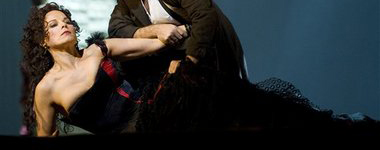
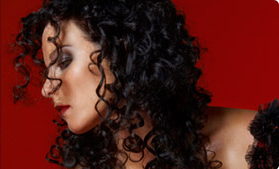
The story takes place in the 2,000 year-old Roman city of Seville, Spain, focusing on the tensions of gypsy women workers in the government monopoly cigarette factory and the military men, presumably guarding the crown’s interests. The soldiers are depicted as uniformed vultures eyeing their prey –the sultry gypsies. The most beautiful of the women is Carmen - Carmenita, as she tells the men. Played by extraordinary mezzo soprano, Elina Garanca, Carmen is nearly masculine in her swagger of independence, yet certain of her dazzling feminine allure. She infuses the character with something more than mere sex. Garanca’s Carmen has gravitas in her insistence on living without restraints, no matter the consequences. Clearly, she is the “general” among the army men with only her beauty and promise of love as her authority.


The story is simple, – Carmen sets her sights and a flower on Corporal Don Jose, sung by tenor, Roberto Alagna, the only soldier who pays her no attention, preferring his finance, sweet Micaela, (Barbara Frittoli), who has delivered a message from Jose’s mother. Despite maternal concern, Jose’s fate is sealed. Too soon, love for Carmen destroys his career, his honor and more. Of course, elitist Lieutenant Zuniga, (Keith Miller) Jose’s commanding officer, thinks Carmen should be his; officers’ privilege. A ruckus among the cigarette women lands Carmen in trouble, but Jose, quickly under her spell, allows her to escape jail, with disastrous results for him.

The opera, sung in French with English supertitles, is in four acts, runs about three and one half hours, and has one intermission, As is traditional with French operas there is plenty of dance, including two pas a duex before the opening curtains, depicting the lovers’ happiness. That's a brilliant touch, as happiness is mostly absent within the story.

The action moves quickly from the opening scenes to a barroom gypsy dance and the electrifying entrance of matador Escamillo, the epitome of manly perfection. Played by Teddy Tadu Rhodes, a 6’5’ baritone, Spain's cultural star trails women into the tavern like so many kite tails. He, too, falls in love with Carmen and the rest of the story does not go well for poor soldier Don Jose.

We’ll leave the plot unrevealed for those who wish to experience it for themselves. However, it’s no surprise Jose ends up with Carmen and her outlaw friends as they plan smuggling operations in the mountains outside Seville. While it is never stated what the smuggled goods are, with the Spanish Crown’s tobacco monopoly, established in 1637, it’s not much of a mystery that cigarette workers are involved.

Roberto Alagna’s Jose is a marvelous match for Elina Garanca’s Carmen. While Carmen is overtly dynamic, Jose’s character only catches fire when ignited by Carmen’s passions. Supporting actors, smugglers Elizabeth Caballero, Sandra Piques Eddy, Earle Patriarco and Keith Jameson do not fade into stock figures, but are individuals with beautiful voices and particular personalities which add color and energy to the action. Conductor Yannick Nezef-Seguin moved the orchestra to match the passions seen on stage, in this enthralling production by Richard Eyre.

In the final act, the noisy crowds outside the bullring, relish seeing the country’s heroes, matadors, as they make their grand approach and entrance into the arena They are arrayed in the most colorful and beautiful costumes seen in the show. Their whip-thin bodies encased in sparkling satins, they command the cynosure their courage demands. It is a telling scene which speaks to the perennial human desire to create and adore superheros appropriate to the culture. Escamillo controls his image and accepts the worship. His character is a worthy consort to now-regal Carmen, which contrasts to poor Jose’s tragic loss of dignity and honor for the sake of lust.

The final scene, inside the bullring, was lost on the audience in my theater as the lighting was so dim it was impossible to discern details. This has been an on-going problem with the MetHD broadcasts - very dark stages with loss of visuals of supporting actors.

Bizet's "Carmen" is a timeless story of passion, a tale of a female Don Juan, told with gorgeous music and superlative talent. Anyone who attends the next Met broadcast will count themselves fortunate to have seen this production.

###


For information: http://www.metroperafamily.org/HDLive

Angela Rocco DeCarlo, copyright 2010.
Angela Rocco DeCarlo, is a veteran journalist, covering travel, culture and entertainment, originally in Chicago, currently based in Southern California. She served as an opera docent for nearly 20 years with the late Opera Pacific, Santa Ana, CA.


Monday, December 21, 2009

GLORY OF CHRISTMAS at Crystal Cathedral


By Angela Rocco DeCarlo

Visitors from around the world plan holiday travel with Orange County, Southern California in mind. While wonderful attractions, parades and merriment at Disneyland and Knott’s Berry Farm are major draws to the area, there is a large and loyal audience for the inspirational Broadway-quality production “Glory of Christmas,” at the Crystal Cathedral, Garden Grove, CA.

There is still time to enjoy “Glory,” as performances continue through January 3, 2010. Audiences return year after year, and this season, on the show's 29th anniversary, children are still mesmerized by the spectacle of Roman centurions on horseback, splendidly robed Wise Men on camels, and townspeople with their wealth of livestock. Mary rides on a little gray donkey to Bethlehem, with Joseph at her side, where a sympathetic innkeeper finds a place for them. The theme parks make merry, but it is the unique “Glory” nativity full-scale musical production which tells the story of Christmas.

It is a simple story. Yet, this well-produced little “opera,” with over 150 performers, and 350 volunteers working in various capacities, brings the nativity alive through dance, singing and recorded music by the London Symphony Orchestra, complimented by the Crystal Cathedral’s world-renowned pipe organ. There are six horses, three adult camels, one baby camel, goats, sheep, donkey and a miniature donkey. Many talented singers and dancers enliven the story in showcase musical scenes. After the performance ends the Wise Men and other cast members are available outside the auditorium to greet visitors or pose for photographs. This year, Miss California (Miss America) Kristy Cavinder, returns to the production for her seventh year, finally as prima ballerina. “I’ve been dreaming of this dancing role since I was five years old,” says Cavinder.

The show includes lovely ballet numbers, solo singing roles by children and adults, as well as choral music. Many familiar Christmas carols blend into the story seamlessly. There’s not an opera scene to compare to hearing “Hark, the Herald Angels Sing” as seven “real” angels soar through the air above the heads of believing children and adults. This is the entertainment that captures the true spirit of Christmas.

****************

Crystal Cathedral
12141 Lewis St.
Garden Grove, CA 92840
Ticket information: 1-877-544-5679, 714-54-GLORY
www.crystalcathedral.org
Discount performances: $20; Dec.18, Jan. 2 & 3
Other performances $35 -$45. Seniors and children 12 &
younger receive a $2 discount, except on discount nights.
December 18th, 2009-January 3rd, 2010

###

Angela Rocco DeCarlo, copyright, 2009

Saturday, December 12, 2009

Chicago: Softball and Italian Museums

By Angela Rocco DeCarlo, copyright, 2009
There’s a lot of Chicago immediately west of Chicago.

Chicago’s western suburbs offer stimulating attractions, “A” class shopping centers, such as Oak Brook Center and Yorktown, with plenty of lovely open spaces and easy access to the city’s attractions, via the Eisenhower Expressway. I chose a Marriott property in this location on a recent trip to visit the new 16-inch Softball Hall of Fame, Forest Park, and the “ Italians in Chicago” exhibit at the Italian Cultural Center, Stone Park. Marriott’s Residence Inn Chicago Oak Brook, is perfect for extended stays and offers a high level of service, comfort and convenience.

I love this all-suite hotel for its homey and convenient layout, complimentary cooked and cold breakfasts and afternoon “socials” with food and beverages and huge lounge, perfect for after-hours meetings on comfy sofas around the fireplace. The design of the registration and entrance area makes for very quick check-ins, putting guests in their rooms within minutes of arrival. There’s plenty of free parking and carts for handling luggage if needed. The spacious and comfortable suites provide a full living room, televisions, desk with internet connections, full kitchen, plenty of closet space and dining area with complimentary coffee supplies. You never feel confined, even with long stays, in what is essentially a mini-apartment. Of course, there is an indoor pool, fitness center and business center with free computer access. The staff is friendly, professional and accommodating; there are safe deposit boxes at the front desk.

The hotel is set back, in a small commercial park, Jorie Plaza, south of 22nd Street, the main east/west road in Oak Brook. From here you can be at O’Hare Airport or downtown Chicago in half an hour (traffic permitting), shop at Oak Brook Center or dine in upscale restaurants, such as Braxton’s, next to the former Marshall Field’s store (Macy’s) in the OB Shopping Center. As a frequent visitor to the area I’ve come to rely on Braxton’s for meetings; the booths provide privacy and guests are allowed to linger as long as necessary. And the seafood is delicious and moderately priced. There are plenty of other good restaurants and shopping along 22nd Street and west in the Yorktown Shopping Center. I always visit the Fannie May candy stores in OBSC for a supply of their delectable chocolates to take home and for gifts. While a frugal sort, I’m happy to purchase luxurious Fannie May chocolate, as I believe it to be the very best. It lacks that waxy taste some other chocolates entail, even expensive ones.

Oak Brook is about 6 miles from Chicago’s western edge where the suburbs begin at Oak Park, land of Frank Lloyd Wright houses, Ernest Hemingway history, and stately Gothic churches. The surrounding towns, original farming communities, such as Downers Grove, Naperville and Aurora have grown so that now the suburban sprawl along the commercial/corporate corridor of I-88 is cheek to jowl west to Iowa. Oak Brook is different; it is a totally new town, the vision of the late Paul Butler and is home to many corporate headquarters. Among the companies that populate Oak Brook are MacDonald’s, Blistex, Ace Hardware, Federal Signal Corp., Papermate, Lions Club International and many more. These days the above-mentioned towns have Disney-ized Main Streets and glamorous residential developments. Their cute Main Streets are a sort of reflected glory, as Walt Disney was a Chicago boy, who also lived in other Midwestern towns growing up. The Main Street he designed for Disneyland, California, 1955, reflects the look and feel of his boyhood hometowns. He knew this image would resonate with the millions of Americans who visit the Park every year. Oak Brook is spread out, was developed carefully, with Butler’s tasteful design control influencing every aspect of this beautiful area, down to the placement of scrubs around the red brick commercial buildings. Like Walt Disney, Paul Butler created a unique environment for enjoyment, sporting and business interests. Polo and golf enthusiasts know the area for its fine sports facilities.

Chicago has always been known as a great sports town. There is plenty of excitement with professional teams in football, hockey, and basketball - with two baseball teams. Fans can support all the pro teams, but they have to choose one baseball team. Either you are for the Chicago Cubs or the Chicago White Sox – never both. The only place those two opposing groups might come together would be on the fields of the famously competitive Chicago 16 inch softball leagues. This game, which began back in the late 1880s, when the Butler family had a diary farm on what would become Oak Brook, developed into the perfect game for the Depression era – all kids needed were a bat and softball. No gloves or fancy uniforms for these kids that played on small schoolyard gravel fields or in neighborhood parks.


As a rather clueless little girl I only knew about softball because my two older brothers, the late Chris Rocco and Peter Rocco, played. There seemed to be dozens of boys in our far west Chicago neighborhood that played softball. Yet, I don’t recall ever going to a game unless it was in our local schoolyard. There isn’t one photo of the Rocco boys in their baseball uniforms – if they had them – or with their ever-changing teams. Softball was a male world, without the adult fanfare accorded Little League players today, who routinely have dozens of parents, grandparents, and assorted relatives cheering them on. I wonder about this somewhat over-adulation where little kids get a trophy for just showing up. But that’s another story.

The long-ago boys played softball, (the ball is actually heavy and hard, but not as hard as a league ball) as my brother Peter said, “…for the love of the game.” Enough people loved the game to organize a 16-inch Softball Hall of Fame Museum. It began in 1996 as a movement to preserve the unique history of the game and to encourage the playing of the game for today’s youth. The modest outdoor museum is located in suburban Forest Park, at DesPlaines and Harrison streets, in a small park; www.16inchesoftballhof.com/history. The museum forum consists of eight display cases featuring hundreds of Hall of Fame inductees, surrounded by four baseball bat columns with a monumental center “clincher” softball to anchor the arrangement.

The outdoor Hall of Fame Museum was dedicated earlier this year, with about 1,000 persons attending. This is a big game in Chicago. A permanent building is in the planning stages. I visited the fledgling museum with my HOFer brother, Peter Rocco, in October. Rain was falling, winds were blowing, nonetheless it was a delight to look at the kiosks to find Peter’s picture and then to read of other players who were known to me only as softball player pals of my brothers. There were Chicago media people, the brother-in-law of the great American tenor Mario Lanza, the ubiquitous restaurateur Rich Melman and other names once known to me as a little girl. Untold numbers of Chicagoans, beginning in the 1920s, fell in love with this hometown game, where it took mighty arms and a quick wit to play successfully. The great thing about this game is men could and would play eternally. Men in their 70s are still playing today.

Now, I wish I had been taken to watch the games when I was young. I wish I had photos of my big brothers with their bats and balls. The Softball Hall of Fame is a wonderful museum that will grow because it honors a significant Chicago institution and the many devoted supporters of the game. It’s worth a look for folks interested in supporting this homegrown Chicago sport.

Afterwards, we headed north west of the baseball museum, going north on Mannheim Road to check out the Italian Cultural Center, 3800 Division St., Stone Park, Il 60165; phone 708-345-3842. www.casaitaliachicago.net. The rainy weather kept us from enjoying the lovely grounds. Frankly, it was difficult to find the museum building as the streets were under construction, but I’m told they have been completed. Nonetheless, I recommend visitors call the Center to obtain directions to the museum and the hours and days of operation. The day we visited no other guests were present.

We had gone to view Dominic Candeloro’s “Italians in Chicago” exhibit. Dr. Candeloro is the author of several books on the Italian experience in Chicago, including "Italians in Chicago."

The small museum building has several small rooms with Italian artifacts and art objects, including a celebrated model of St. Peter's Square, Vatican City, Italy, but it was the narrative of “Italians in Chicago” that had my attention. Candeloro’s intention is to tell the story of Italian immigration through photographs, clothing, letters, work papers and ephemera.

Italians were among the approximately 12 million legal European immigrants to enter the United States through Ellis Island, which was in operation from 1892 to 1954. Today, approximately 50% of the U.S. population can trace ancestry to some person in that 12 million. Italians, most from repressive Southern Italy, were among the Europeans who entered the U.S. and submitted to both legal and medical examinations. These individuals could not have a criminal record and were required to be self-sufficient, in good health, with a promise of work and a sponsor. They neither expected nor received any monetary assistance from government agencies. They expected to work, not being inclined to accept any "free lunch." Being admitted into America was all they asked – they did the rest themselves.

Dr. Candeloro’s exhibit requires focused attention as many objects and photographs are in the original format, not enlarged. The materials are divided among four subjects: family; work; neighborhoods and gatherings. For example, the “work” section held photos of small shops, men working at various manual jobs, work papers, including papers permitting children to quit school to help support the family, which was considered honorable. According to this exhibit the immigrants sent 75% of their wages back to Italy to help their families. The estimate given for the amount was $750 million sent from 1880-1920. Considering that a man might earn 10 cents an hour it was a considerable sum. The materials also include steamship logs, tickets, receipts and citizenship papers.

An undated letter written by Angela Digiorgio, a wife in Italy, to her husband in American, offers insight into the hardships endured in this period where communications was mostly restricted to letters.

“I have not heard from you, dear husband…some said you had been injured….” She wrote how she wept each night…yet, ended with hope and “I embrace you with all my heart…your children kiss your hand…Your affectionate wife” That line, "...your children kiss you hand..." broke my heart. The end of that story is not shown.

In general, the immigrants settled in various sections of Chicago according to their towns of origin. Italians, as other ethnics do, identified themselves through their family and their towns. If your family, such as mine, originated in the mountain town, near the ruin of a medieval castle, inland from Sorrento and the Bay of Naples, called Ricigliano, you were a Riggi. I’m told my Rocco family arrived in Chicago some time in the 1880s. A small 1925 photo of a religious procession in Ricigliano, Italy, shows the men carrying a statue of the town’s patron Saint Rocco. Those festivals have continued to the present time. My late sister, Christine Francis Rocco, attended mass honoring the feast of Saint Rocco every year at St. William Church, Chicago, until 2005.

As the Italians prospered they moved out of the old neighborhoods, buying homes at the edge of Chicago. Some families, such as my Rocco grandfather, took the neighborhood with them. Three sets of married siblings, who bought several three-flat buildings in the mid-1920s, in the Austin area, took some of the neighborhood with them. But some did not. Many moved and then longed for the warmth and comfort of their former homes. One placard laments “…the new neighborhood can never become what the other one was…like a mother dying…the stepmother cannot take the place of the mother…and the new neighborhood cannot replace the old…”

Candeloro’s book, “Italians in Chicago” has a photograph of a typical newspaper stand. The caption states that virtually "...all the city’s newsstands were run by men from Ricigliano, who then sent their sons to college and law school." The book states that as late as the 1960s the barber’s union indicated the majority of barbers were of Italian decent. They, too, sent their sons to college and grandsons to law and medical schools. My husband’s father and grandfather were among these men. These were men who moved up from working class to small businessmen. This was the promise fulfilled for the Italians who came to Chicago in the early 1900s. This is a museum worth experiencing for those interested in the immigrant and Italian experience in Chicago. As a traveler I relish museums such as the softball and Italian, before they become Disney-ized and slickly over-produced. There is a charm and sincerity about them in the early stages when the experiences depicted are immediate. I'm glad I saw these two little gems. For additional information contact: Chicago Office of Tourism; www.cityofchicago/tourism.orgwww.explorechicago.org.


Marriott’s Residence Inn Chicago Oak Brook, 790 Jorie Boulevard, Oak Brook, Illinois 60523, is perfect for extended stays and offers a high level of service, comfort and convenience. Contact reservations@residenceinn.com or google the hotel name for information; Phone 1-630-571-1200; FAX1-630-571-1300.

Angela Rocco DeCarlo is a former Chicago journalist, who covers travel, entertainment, and lifestyle. She lives in exile, in Southern California, missing her old neighborhood. Copyright, 2009.

Chicago: Favorite Things

By Angela Rocco DeCarlo, copyright, 2009

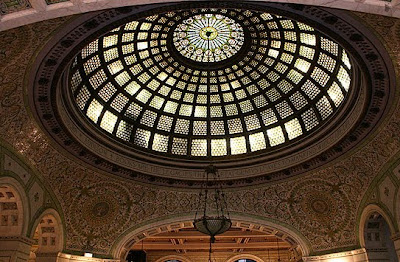
Chicago – like any great city – has to be enjoyed in small bites. I recently revisited my former hometown, where you can sample at one time only a small slice of the great confection that is this beautiful lakeside city. However, there are attractions that are unique or stunningly significant that should be on any traveler’s short list. This is a sort of "Best of"...Some favorite things include: tour of the magnificent Lake Michigan waterfront museum campus of parks; Art Institute’s Impressionist paintings and Thorne Miniature Rooms; Cultural Center’s magnificent Tiffany Dome ceiling, largest in world; Sue, the largest and most complete T-Rex, Field Museum of Natural History; Museum of Science and Industry, 1893 Colombian Exposition building; Lincoln memorabilia/death bed, Chicago History Museum; Chicago’s 38 bascule (meaning see-saw) bridges, including Michigan Avenue Bridge Museum; Sears Tower (tallest building in Western Hemisphere) and Hancock Center observatories; and Chicago Water Tower on Michigan Avenue, a remnant of the Great Chicago Fire, 1871.Yes, I know Sears Tower has been renamed, as has Marshall Field’s, but Chicagoan are loath to let go, hence the names Sears and Marshall Fields reverberate.

On my recent trip, my plan was to sample two Marriott properties, one in the suburbs, Residence Inn Chicago Oak Brook and one on Michigan Avenue, Marriott Chicago Downtown Magnificent Mile, do the Chicago museums, have tea in a fabulous location, such as the Peninsula Hotel, gorge on Chicago’s uniquely delicious deep dish pizza and see the Softball Hall of Fame, Forest Park and Italian Cultural Center, Stone Park. I’ll deal with the suburban attractions in a separate article.

With Chicago a lifetime wouldn’t be enough to see it all. A taste of Chicago could include many other attractions such as Wrigley Field and the Cubs; Lyric Opera House; El train ride; Buckingham Fountain; Navy Pier; Architectural boat and lake cruises; Tribune Tower visit; deep dish pizza at Pizzeria Uno or Due or Lou Malnati’s Pizzeria. The best way to peruse the vast panoply of Chicago delights is to access the tourism information at www.cityofchicago/tourism; phone 312-567-8500.Or www.explorechicago.org/tourism. For now we’ll go with llama-like leaps among some favorites everyone should know about.

First off, if you plan to pack up and leave soon, include plenty of warm clothing, boots and heavy coat. You can Ice skate downtown and enjoy waterscapes along Lake Michigan’s shoreline that are breathtaking, but you need proper clothing. So don’t let the weather keep you home; Chicago knows how to handle cold and snowy weather. Life goes on - excitingly.

It’s too bad Chicago wasn’t lucky enough to be founded by the Romans, as were London, Paris, Cologne and a long list of other European cities. Then it might have had instant world-class recognition instead of having to scramble to introduce itself. But then London (Londinium) is 2,000 years old and the city of Chicago not even 200 years – it was christened as a city in 1837, was destroyed by the Great Chicago Fire, 1871, and was almost instantly rebuilt with echoes of the urban Parisian parks and boulevards of that era. Astonishingly, it opened the Art Institute of Chicago in 1889, just eight years after cleaning up the ashes.

At that time, the city was fortunate in its wealthier citizens and architects, such as architect and city planner Daniel Burnham, who determined to make the city as beautiful, elegant, and cultural as any European city. Burnham ensured the lakefront remain open park space. However, when developers sought to foil Burnham’s grand design, retail tycoon Montgomery Ward sued and won the protection of Chicago’s Lakefront. People like this, who loved Chicago, kept it beautiful for future generations.

The tycoons of the era, such as Marshall Field, Potter Palmer and others, had enormous civic pride and gave generously to establish Chicago’s great cultural institutions. Bertha Honore Palmer, wife of millionaire businessman Potter Palmer, (Palmer House Hotel) was an intelligent and avid Impressionist painting collector, under the guidance of American painter Mary Cassatt, who was part of the artist Impressionist cohort of the era. Palmer amassed a large collection of the best of the time. A fascinating Palmer exhibit at the Chicago History Museum includes gorgeous gowns, jewels and other artifacts, along with biographical details of Palmer’s life. It is said she traveled with her favorite Impressionist painting, Renoir’s “Acrobats at the Cirque Fernando,” which keeps company with “On the Terrace” at the AI. Mrs. Palmer’s Impressionist bequest in 1922 and the 1926 donation by Helen Birch Bartlett ensured the Art Institute of Chicago as the preeminent Impressionist collection.

The Impressionist collection at the Paris Musee d’Orsey, situated in a former train station - love those ginormous clocks – has the reputation, perhaps because of its location, but most agree it is Chicago’s collection that shines.

Chicago’s Impressionists includes Renoir’s “On the Terrace”, Monet’s “Hay Stacks”, El Greco’s “Assumption of the Virgin”, Seurat’s “Sunday Afternoon on La Grande Jatte,” Gustave Caillebotte’s “ Paris Street, Rainy Day,” Grant Wood’s “American Gothic,” as well as works by Mary Cassatt, Van Gogh, Degas, Monet, and so many more.

Imagine - 2,000 acres of the city’s core burned in 1871, and eight years later there’s an art museum amid the new buildings. The city’s energy enabled it to host the 1893 World’s Colombian Exposition with its magical “White City.” The Fine Arts Building survives today as the Museum of Science and Industry, with its superb colonnade of caryatids (female support columns). It’s working coalmine and German submarine are major attractions.

Chicago spreads out in three directions – with Lake Michigan on the east. Therefore, to easily reach favorites, I selected the Marriott on Michigan Avenue for its convenience, luxury and excellent service. Settling into the newly transformed Marriott Chicago Downtown Magnificent Mile, 540 N. Michigan Ave., 312-245-4728, ChicagoMarriottDowntown.com, was easy. With this hotel you are near a huge array of restaurants, shopping, museums, attractions, summer boat rides and foot-cruising the Magnificent Mile Michigan Avenue with its world-class retail shops.

The hotel has recently been beautifully redone and features a lobby Great Room, which brings to mind the “Wizard of Oz.” Perhaps the designers took their cue from Chicagoan L. Frank Baum’s famous “Wizard of Oz” books, the first published in 1900. The classic movie came out in 1939, forging indelible images in Americans’ minds of tornados, Dorothy Gale and her three charming friends. The Marriott’s Great Room lobby features a gigantic architectural column, which for the entire world looks like a tornado funnel cloud. The horseshoe bar curves around it - visually riveting. The bank of TVs and beer taps equals after-hours relaxing.


I loved the bed in the comfortable guestroom. Wondering if I could buy one like it, I learned the beds are for sale on the hotel’s website. Though large – 1,173 rooms, including suites – the hotel's service is boutique-style. The staff took pains to banish feathers from this allergy sufferer’s room: A health-saving service. There are all amenities one desires - location, fitness center, pool and steam room.

The auto entrance is at the back on Rush St., both valet and self-park are available for slightly under $50 per day. Room rates depend on season and dates, so best to contact the hotel directly for the best rates. Phone: 312-245-4728; ChicagoMarriottDowntown.com.

After settling into the Marriott we took a $5 short cab ride to see “my” Impressionist collection and Thorne Miniature Rooms at the Art Institute. Alas, Renoir’s “On the Terrace” has been moved; I liked it in the center of the left wall – it anchored that gallery perfectly. After searching I learned the Wedgwood Portland Vase, a copy of a magnificent 2,000year old Roman glass vase (Roman original, British Museum) was not currently on display. As this is a great favorite I missed seeing it. But the museum has more than a quarter million objects, not everything can be on display.
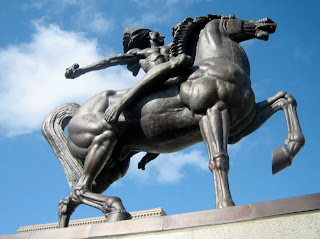
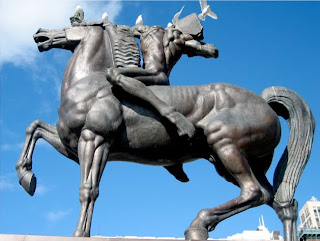
If time is limited it’s best to take a bus tour to get a taste of the city’s charm as you glide around the beautiful lakefront – unique for an American industrial city – and take a peek at its new Millennium Park and other major cultural attractions. Be sure to make note of the entrance to Grant Park, at Congress Plaza Gardens, for the two magnificent Ivan Mestrovic 1928 bronze equestrian statues of Native Americans – the Bowman and the Spearman. Though not specified, the warriors’ obvious superb horsemanship and imposing power suggest they may represent the great horsemen of the plains, the Cheyenne. The sculptor purposely did not include the weapons – leaving that to the viewers’ imagination.
After a tour of the Thorne Rooms, splendidly recreated miniature period rooms that feature setting from the 9th century to 1930s, exquisitely furnished with authentic materials of exotic woods, stained glass, silver, gold, stone, terrazzo, Wedgwood plaques, and sculptures, we headed to the Peninsula Hotel for afternoon tea. There’s something soul-satisfying in such a day. The Thorne Rooms, 68 finely tuned replica room settings commissioned by Mrs. James Ward Thorne between 1932 and 1940 are favorites of adults and children alike. My then-three year old granddaughter, Michelle, when viewing them for the first time, uttered an awed “They’re so cute.” Don’t miss them.

So much beauty over-awes and afternoon tea is just the thing to revive the soul. So after the art we cabbed it to the splendid Peninsula Hotel, off Michigan Avenue at Superior. Afternoon tea is something I enjoy in every city visited. All are distinctive, but share a predictability that is relaxing and soothing. Everything is bite-sized, no cutting required and everything is slightly sweet. In fact, this is my favorite meal – well, maybe Chicago pizza ties the score. In any case, afternoon tea usually has three courses: scones, pastries and sandwiches, along with the tea, of course.
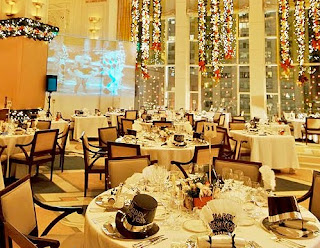
The Peninsula boosts a gorgeous space called The Lobby, with Murano glass chandeliers, custom carpets and octagonal-backed padded armchairs. The impression is of sun-kissed splendor even on a rainy day. Murano glass has a long history, from the 9th century to the present. The manufacturing center is located near Venice, Italy, on a tiny island in the Adriatic Sea. The Peninsula’s ceiling fixtures are delicate cascading droplets of sparkling light that draws the eye in a room full of beautiful accouterments.

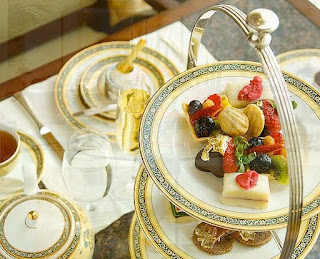
The table is set with Wedgwood china set on cream-colored linen placemats. Two string musicians on an upper balcony serenade the guests below. My anticipation was well rewarded when the small chocolate chip scones arrived with cream and strawberry preserves; the combination is scrumptious. Green tea was served in a small plain white pot, along with sealed envelopes of sweeteners– so long to the darling sugar cubes long associated with tea service.

All the food is brought to the table at once on a three-tired silver server. Among the delectable treats were the scones, chocolate mini-cupcakes; pink macaroon cookies and perfect chicken salad sandwiches. However, guests need not order the entire tea service.

“My wife and I always celebrate our birthdays at tea, “ says guest, Dr. Michael Mercer, an industrial psychologist and author of several books, including “Hire the Best – Avoid the Rest.” He and his wife, Mary, admitted to sampling tea service in all the fine Chicago hotels.
“We like the Peninsula best because we can order only what we like,” he continued. “Mary likes scones and finger sandwiches, but not pastries. I don’t care for the finger sandwiches. So we order a la carte and each is happy. And we love the charming, very airy and open feel of the room. And the music is wonderful.”

They were the kind of people one thinks might be on their way to the Lyric Opera to catch Puccini’s “Tosca.” The Lyric lists 77 performances for the 2009-2010 season, with “Tosca” playing again in January 2010. If it’s the Zefferelli production I’m tempted to fly back for a matinee, if only to erase the memory of the Metropolitan Opera’s recent screwy “Tosca” production. The 1927-’29 Civic Opera House is a beautiful auditorium that enhances the stage experience. Many modern facilities resemble padded shoeboxes with no place of beauty to rest the eye.

There were some shoppers at tea, not surprising, as the Peninsula is convenient to Water Tower Place and other premier Chicago retail centers. If weather permits, a stroll the length of Michigan Avenue from the river north to the Drake Hotel, is worth the shoe-leather: the Michigan Avenue bridge, Tribune Tower, Wrigley Building, new Trump building, American Girl Place, Marina Towers and upscale retailers line the boulevard. Anyone with a little girl will relish AG Place – a virtual harem of girlie-ness. As the mother of three sons, I found it rather exotic and somewhat bewildering, especially the beauty salon for dolls. Nonetheless, it was the realization of my heartfelt dream to surprise my granddaughter with an American Girl look-alike doll of green eyes and auburn hair. Adorable.

It is impossible to be in Chicago and not eat deep-dish pizza. My husband and I have been diners of the originals since our dating years as teens. Lou Malnati’s, a descendent of the original Pizzeria Uno and Due (Italian; one and two) is a favorite. We usually load up on a dozen frozen Malnati pizzas in a special bag, which was forgotten. Result: no Chicago pizza in California, truly a sorry state.

In any case, there are dozens of Malnati outlets all over Chicago and one on Wells St. However, the night we wanted pizza we were walking and it was raining so we landed in Pizzeria Due on Rush. It’s the place we went to as college-age kids. The pizza was nearly as we remember it.

It’s nice to be able to go back “home.” Especially when the city is Chicago.

Angela Rocco DeCarlo, former Chicago journalist, covers travel, entertainment, and culture for www.travelingdiva.com, www.angelaroccodecarlo.blogspot.com, and www.heralddeparis.com. She lives in exile in Southern California.